


Hermetic sealing with micro-TIG welding: gas-, liquid-, and vacuum-tight seals
Hermetic seals are gas-, liquid-, and vacuum-tight closures for capsules, sensor housings, and electronic components. They must simultaneously meet the required leak rate, minimize heat input to the capsule contents, and deliver seam quality that is reproducible across batches. Micro-TIG welding with the Lampert Micro Arc Welder meets these requirements for laboratory applications, research, small-batch sensor production, and medical technology.
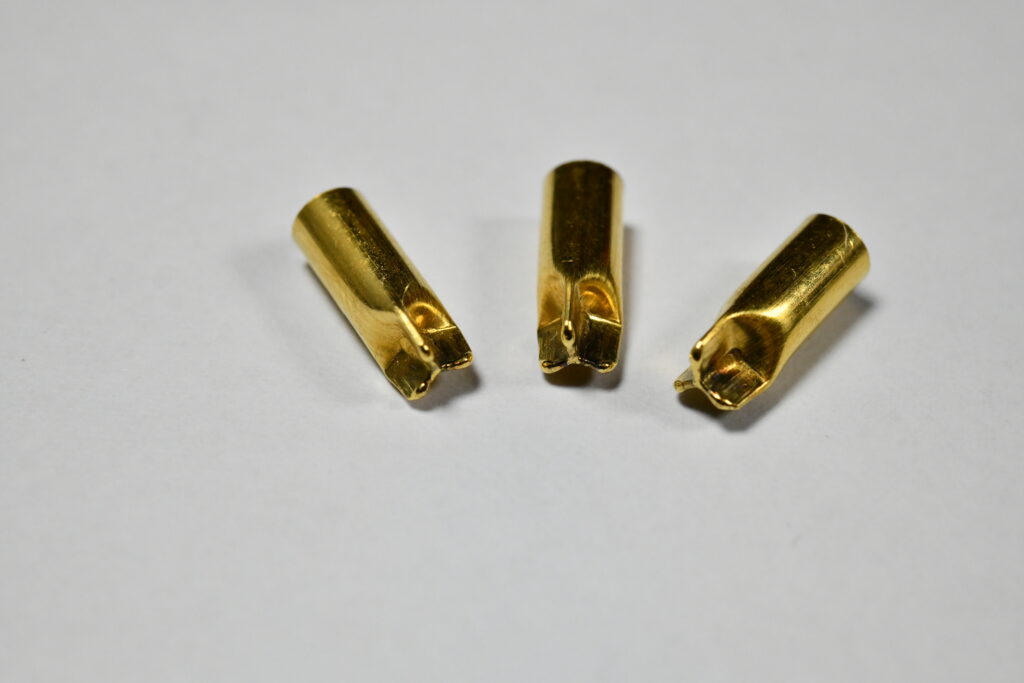
Why hermetic sealing is a process problem.
Sealing a capsule, sensor housing, or electronics enclosure to be vacuum-tight rarely fails because of the weld itself. The real constraint is the contents: radioactive seeds, lithium electrolyte, biological samples, air-sensitive catalysts, pre-assembled sensor electronics, or the calibrated filling of a pressure transducer. Heat, vibration, and contamination must not reach the contents. This shifts the question from “Can this seam be made gas-tight?” to “Can it be made gas-tight without altering the contents?”
Three characteristics are decisive, in this order:
- Leak rate below the application-specific threshold:
The application determines the required value. - Minimal heat transfer to the contents:
The heat should remain within the capsule wall and not affect the contents.
The decisive factor here is the selected pulse duration, measured in milliseconds. - Batch-to-batch reproducibility:
Preset welding curves, documented parameters, and a defined workpiece mounting system are more important than operator experience alone.
How tight is “hermetically sealed”?
“Hermetic” is not an absolute value. The term always refers to a specified leak rate. Testing is conducted in stages: first, the fine leak test using helium mass spectrometry, followed by the coarse leak test. Helium is used as the test gas because it occurs only in trace amounts in the atmosphere, is chemically inert, and can be detected with high sensitivity using mass spectrometry.
Depending on the application, typical specifications range from approximately 10⁻⁶ mbar·l/s for larger industrial enclosures to 10⁻⁹ mbar·l/s for implantable electronics and high-precision applications. The U.S. standard MIL-STD-883 Method 1014, which applies to microelectronic enclosures, grades the permissible leak rate according to cavity volume within precisely this range. The leak rate achieved by a specific seam depends on its geometry, material, and preparation, and is validated on the finished component via a helium leak test.
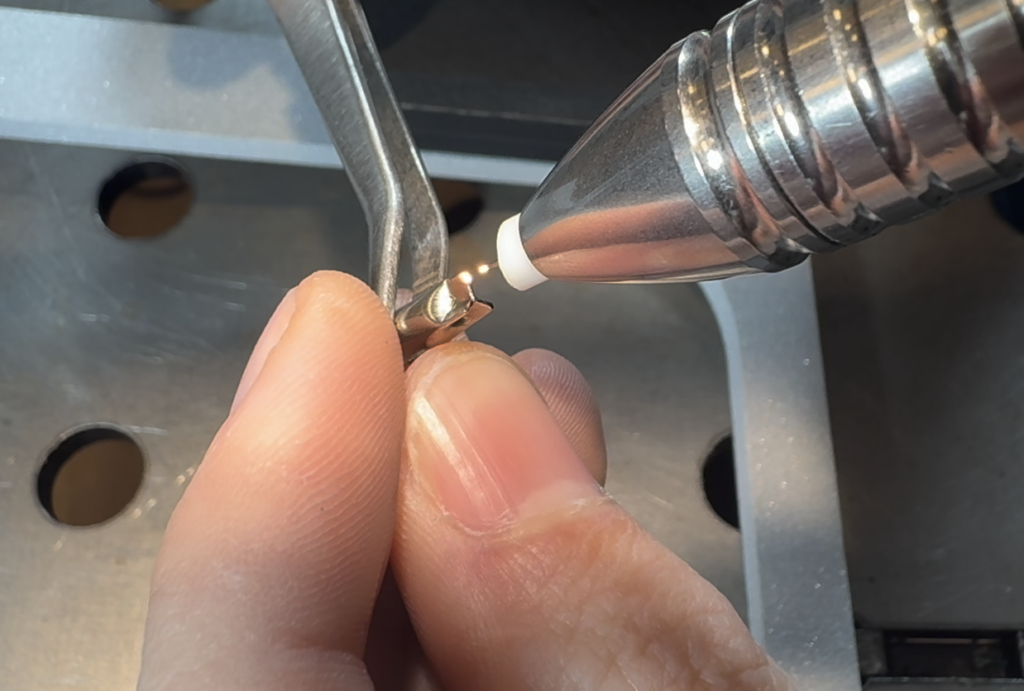
Typical applications
Laboratory and scientific containment
- Brachytherapy capsules:
Sealing radioactive seeds in thin-walled stainless steel or titanium capsules without affecting the contents thermally. TIG welding of the open end of the capsule is an established production process for sealed radiation sources. - High-pressure cells:
Platinum and Pt-Rh cells for experimental high-pressure research and hydrothermal synthesis - Encapsulation in a glovebox:
Sealing air- or moisture-sensitive samples in an inert gas atmosphere - Reference and standard capsules:
For example, for isotopic analysis, neutron activation analysis, and trace element analysis
Industrial sensors and electronics
- Pressure sensor cap:
Seals the stainless steel sensor housing with an IP67/IP68 rating - Accelerometer and gyroscope modules:
Air- and vacuum-tight sensor designs for aerospace, automotive, and measurement technology - Sealing the housing around glass-to-metal feedthroughs:
The final, hermetic housing seal on the sensor
Glass-to-metal feedthroughs with Kovar are the standard for electrical wiring; welding seals the housing around them. - Hermetic electronic enclosures:
For example, for high-reliability applications in aerospace, subsea technology, defense, and medical technology
Medical technology
- Implantable sensors and stimulators:
Titanium and stainless steel housings seal the device without causing thermal damage to the internal electronics - Implantable delivery systems:
Dense drug reservoirs for controlled drug delivery - Protection of sensitive electronics:
For example, against bodily fluids in active implants
Materials for hermetic seals
| Material | Typical use | Remark |
|---|---|---|
| Stainless steel 1.4404 / 316L | Sensor and pressure transducer housings, brachytherapy capsules | Highly weldable, biocompatible |
| Stainless steel 1.4307 / 304L | General laboratory enclosures, food-grade applications | Very weldable |
| Grade 2 / Grade 5 titanium | Implantable housings, corrosion-prone laboratory capsules | Highly weldable, biocompatible |
| Platinum and Pt-Rh alloys | High-pressure capsules, high-pressure research | Very weldable, thin wall thicknesses |
| Kovar (FeNiCo) | Glass-to-metal feedthroughs, hermetic sealing for electronics | Well-established for hermetic connections |
-based alloys (Inconel, Hastelloy) | High-temperature sensor housings | Very weldable |
| Tantalum | Enclosure suitable for corrosive environments | Conditionally suitable; test welding recommended |
| Niobium, zirconium | Special laboratory applications | Conditionally suitable; test welding recommended |
Why use micro-TIG welding for hermetic seals?
Minimal heat input to the contents:
Pulse durations ranging from 0.1 to 34 milliseconds keep the interior of the capsule at virtually ambient temperature during the sealing process. For brachytherapy seeds, biological samples, air-sensitive substances, and pre-assembled sensor electronics, this difference determines whether a component is usable or damaged.
Verifiable tightness:
When properly prepared, the seam achieves reproducible leak rates within the industrial hermetic range. The specific value is verified by a helium leak test on the finished component; it is application-specific.
Reproducibility through preset welding curves:
The Micro Arc Welder comes with twelve material programs (universal, gold, silver, platinum, palladium, bronze, stainless steel, titanium, aluminum, tin, brass, copper). Nickel-based alloys such as Inconel can also be welded. Parameters are documented, and processes are repeatable.
Use in the glovebox:
With the proper preparation, the device operates in an inert gas atmosphere.
Pure metallurgical bond:
No flux, no solder line, no contamination pathways. This is important for laboratory applications involving isotopic or chemical analysis.
Cost and space advantages over lasers for small-volume production:
Comparable sealing quality at a fraction of the cost of a laser system, plus a portable tabletop design.
For high-volume production, lasers remain the more economical choice.
Comparison of sealing methods
| Process | Strength | Weakness | Best suitability |
|---|---|---|---|
| Micro TIG welding (Lampert Micro Arc Welder) | Individual parts and small batches, portable, tabletop design with microscope, wide range of materials, low investment | Not designed for large-scale production in the millions | Laboratory, research, small-batch sensor production, medical implants |
| Laser welding | High precision, can be automated, suitable for large-scale production | High investment, stationary | Large-scale production runs with defined geometry |
| Electron beam welding | deep, narrow weld, very small heat-affected zone | Very expensive; requires a vacuum chamber | High-quality hermetic seals in the aerospace industry |
| Glass-to-metal feedthrough (soldered) | Standard for electrical feedthroughs | A single component, no housing closure | Electrical cable bushings |
| Resistance and seam welding | Suitable for high-volume production | Only for specific geometries | Lithium cells, can ends |
| Ultrasonic welding | fast, no heat input | limited to polymers | Polymer hermetic sealing |
As a rule of thumb: individual laboratory components, research capsules, small-batch sensor production, and implant housings are best suited for the Micro Arc Welder, while mass production in the millions is best suited for laser or seam welding.
Practical recommendations
Preparation
- Thoroughly pre-clean the workpiece, usually in an ultrasonic bath. Contaminants can cause pores in the weld.
- Finish preparing the component before welding: trim, label, and treat the surface.
- First pour in the contents, then seal the capsule.
Welding parameters
- Low energy and a tapered tungsten electrode for thin capsule walls. Practical starting point: 15 to 25% energy, 0.5 to 1.5 ms pulse duration; increase gradually if necessary.
- Inert gas: argon ≥ 99.9% (argon 4.6), flow rate approximately 2 l/min with automatic pre- and post-flow.
- If the contents are highly heat-sensitive, use a heat-dissipating tray or clamping device that draws heat away from the contents.
Validation
- Helium leak test after welding. The achievable leak rate depends on the geometry and surface preparation.
- Visual inspection under a microscope: a clean, oxide-free weld with no pores.
- Cross-section of the first sample to document the weld penetration depth and weld quality.
Recommended equipment: the Lampert Micro Arc Welder
| Specification | Value |
|---|---|
| Peak current (TIG) | 5 to 1,200 a |
| Pulse duration | 0.1 to 34 ms |
| Minimum workpiece thickness | 0.1 mm |
| Weld spot diameter | 0.2 to 4.0 mm; for depths over 1 mm, use a 1.3 mm electrode |
| Material sets (default) | 12 (universal, gold, silver, platinum, palladium, bronze, stainless steel, titanium, aluminum, tin, brass, copper) |
| Aluminum mode | Specially optimized |
| Industry 4.0 interface | Modbus TCP/IP via LAN (21 documented registers) |
| Patented welding process control | Yes (real-time error detection) |
| inert gas | Argon ≥ 99.9%, approximately 2 l/min |
| Display | High-resolution, 768 × 576 pixels |
| Weight | 10.9 kg |
| Certification | EN 60974-6, EN 61000-6-2/-6-4, RoHS 2011/65/EU; UKCA-compliant |
| Warranty | 1 year; developed and manufactured in Germany |
| Investment (full starter package) | Starting at approximately 7,000 EUR net |
Frequently asked questions (FAQ) about hermetic sealing
Yes. Thin-walled titanium and stainless steel capsules can be sealed with minimal heat input. TIG welding of encapsulated radiation sources is a well-established process. Application-specific validation via a helium leak test is recommended.
Yes. The weld can be tested using a helium leak test after welding. The achievable leak rate depends on the geometry, material, and preparation.
With the proper preparation, yes. The process takes place in an argon inert gas atmosphere.
Micro-TIG welding is more cost-effective and portable for individual parts and small production runs, while laser welding is better suited for large-scale production runs with defined geometries. The weld quality is comparable for small production runs, and the investment is significantly lower.
Yes. Platinum and Pt-Rh alloys are very easy to weld when used in thin-walled applications and are commonly used in experimental high-pressure research.
Argon ≥ 99.9% (argon 4.6) at approximately 2 l/min, with automatic pre- and post-flow.
Electron beam welding produces very deep, narrow welds with a minimal heat-affected zone in a vacuum, but requires a vacuum chamber and a significant investment. Micro-TIG welding is performed in an atmosphere under an inert gas and is suitable for individual parts and small production runs in the aerospace and automotive industries.
The Lampert applications team accepts inquiries through our contact form and, upon request, will perform a test weld and provide a written welding report.
When micro-TIG welding is the right choice
The Lampert Micro Arc Welder is ideal for laboratory capsules, research encapsulation, small-batch sensor production, and implant housings: it delivers hermetic seals at industrial standards, maintains a pulse duration short enough to protect the capsule contents, and comes with twelve preset material programs for reproducible results across batches. The investment threshold of approximately 7,000 EUR for a complete benchtop workstation is an order of magnitude lower than that of comparable laser systems. This is crucial when production volumes range from the dozens to the thousands, rather than the millions.
For mass production runs in the millions with defined geometries, such as sensor housings in automotive engineering or lithium-ion cell caps. Laser and seam welding remain more cost-effective. The processes complement each other: micro-TIG for development, prototype validation, and small-batch production, with a switch to laser welding once the annual volume justifies the investment.
For test welds and application-specific advice, please contact the Lampert applications team through our contact form.
A written welding report is provided with every test weld.
A question about a specific component?
Our application engineers look at your joining task and answer with reliable information on material, parameters and feasibility. A sample weld with a written welding report is free of charge and possible from 0.1 mm material thickness. You get the result together with the parameters we used, so you can reproduce it on your own component.