

Professional ring casting with the FUSION casting centrifuge
Ring casting is one of the fundamental techniques of jewelry making – and with the FUSION casting centrifuge, it can be implemented for the first time on a compact tabletop device in professional quality and without sprues. This tutorial guides goldsmiths, silversmiths and ambitious beginners step by step through the complete casting process: from preparation to the actual casting in gold and silver alloys. Please also take the time to read the FUSION operating instructions in detail.
Put on personal protective equipment
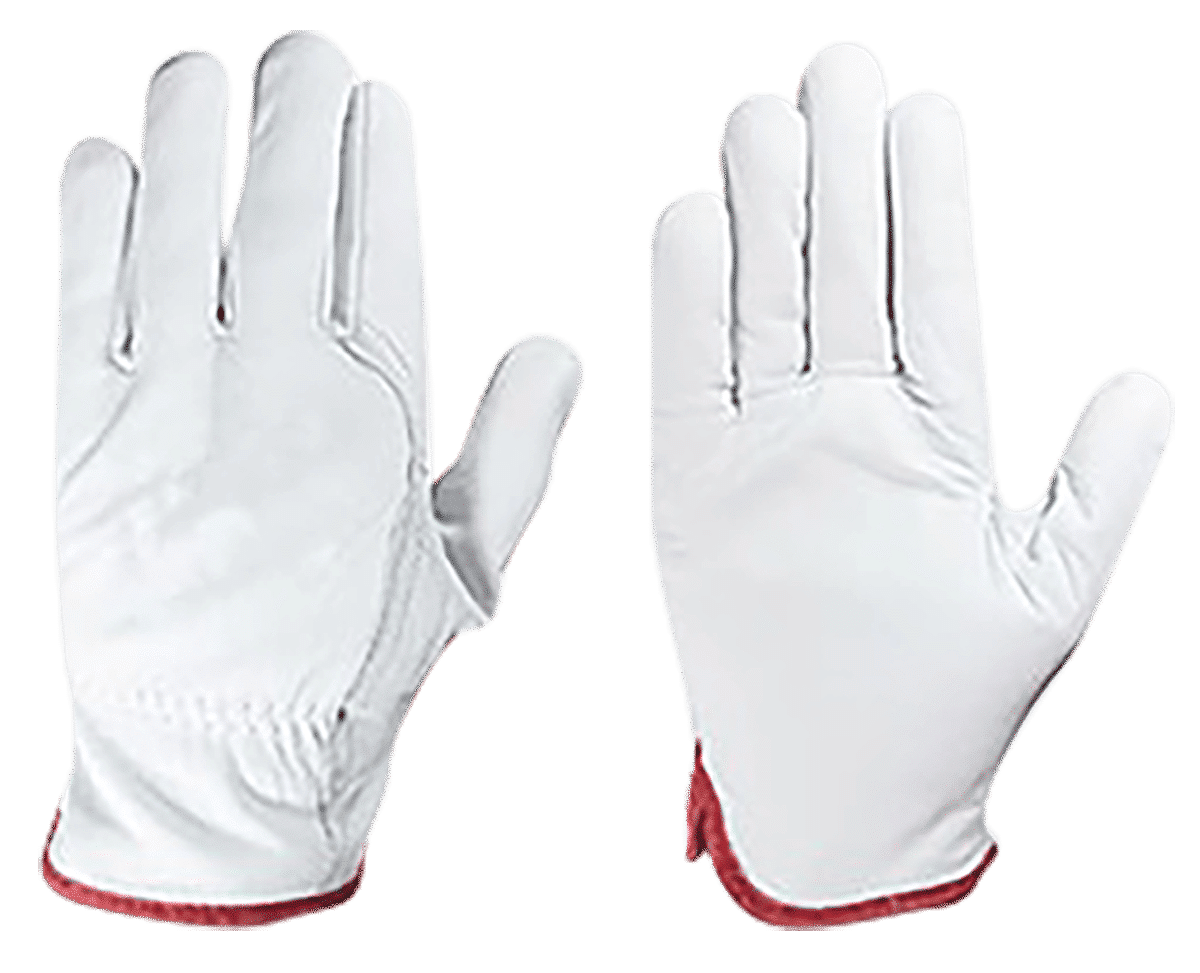
Your personal safety comes first: wear suitable protective gloves, safety goggles and, if possible, an apron made of leather or other heat-resistant material. Wear long-sleeved, non-flammable clothing.
Please refer to the operating instructions for complete safety instructions.
Pre-treat the mold with release agent
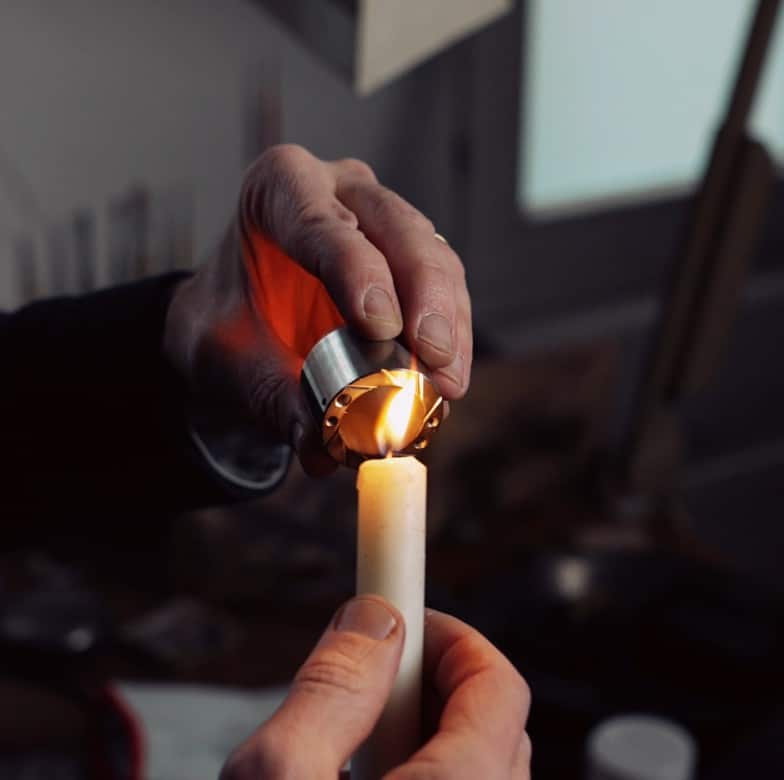
Treat the mold and all parts that may come into contact with molten metal,
first with a suitable release agent, e.g. with HeBoCoat® SL-E 200 from company Henze, ,
spray 3MTM Bornitrid EP (formerly EKamold® EP) or with a comparable product.
The soot from a candle or an oil lamp can also achieve the same effect so that the ring can be easily removed from the mold after casting.
At the same time, the mold absorbs less energy from the melt.
After three to four casting processes, the mold should be carefully cleaned (e.g. in an ultrasonic device or with a brass brush) and the coating reapplied.
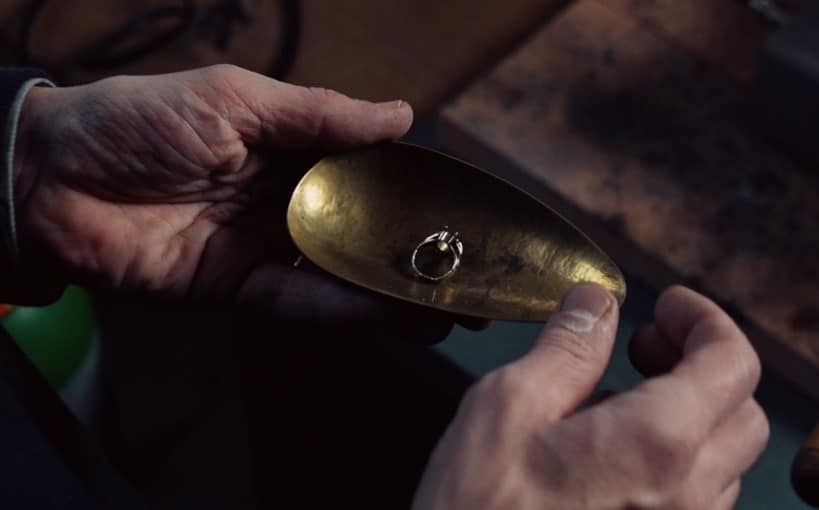
Prepare the correct amount of material
Don’t use too much or too little alloy—
our handy FUSION alloy calculator will help you with that. You’ll find it at the bottom of the FUSION product page.
If possible or available, add a portion of fresh alloy – this improves
the melting and flow behavior.
Avoid extreme combinations, e.g. very thin material combined with a very wide ring rail. A square cross-section will flow out better than an extremely flat one.
Three different mold diameters are available: 24 mm, 21 mm and 18 mm.
This corresponds to the outer diameter of the ring after casting.
The FUSION may only be used for casting gold and silver alloys!
Ensure shielding gas supply
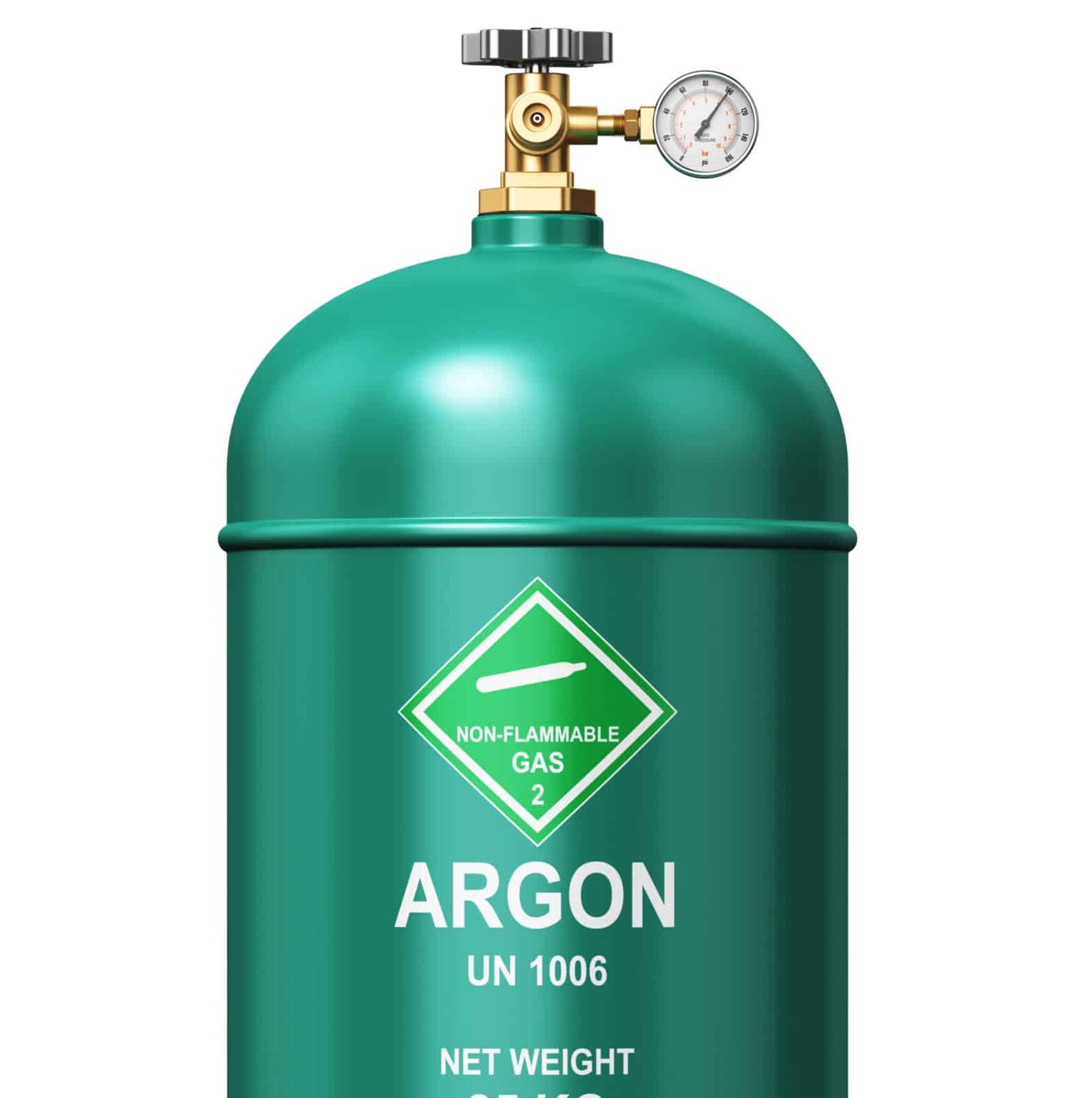
If you have Argon 4.6 available (see also the “Initial Setup” video), activate the shielding gas supply on the FUSION and set the gas flow to approximately 2 liters per minute; see also the FUSION operating instructions.
Especially if only alloy that has already been cast (e.g. old jewelry) is to be used, this can have a positive effect on the quality of the casting.
Preselect the desired rotation speed
Switch on the FUSION and select the speed depending on the alloy and material quantity. With a little experience, you will intuitively find the right speed for your casting task.
A speed of approx. 1200 to 1800 rpm is often sufficient, even if the FUSION can deliver up to 3000 rpm.
Wait a few seconds until the FUSION has reached the selected speed.

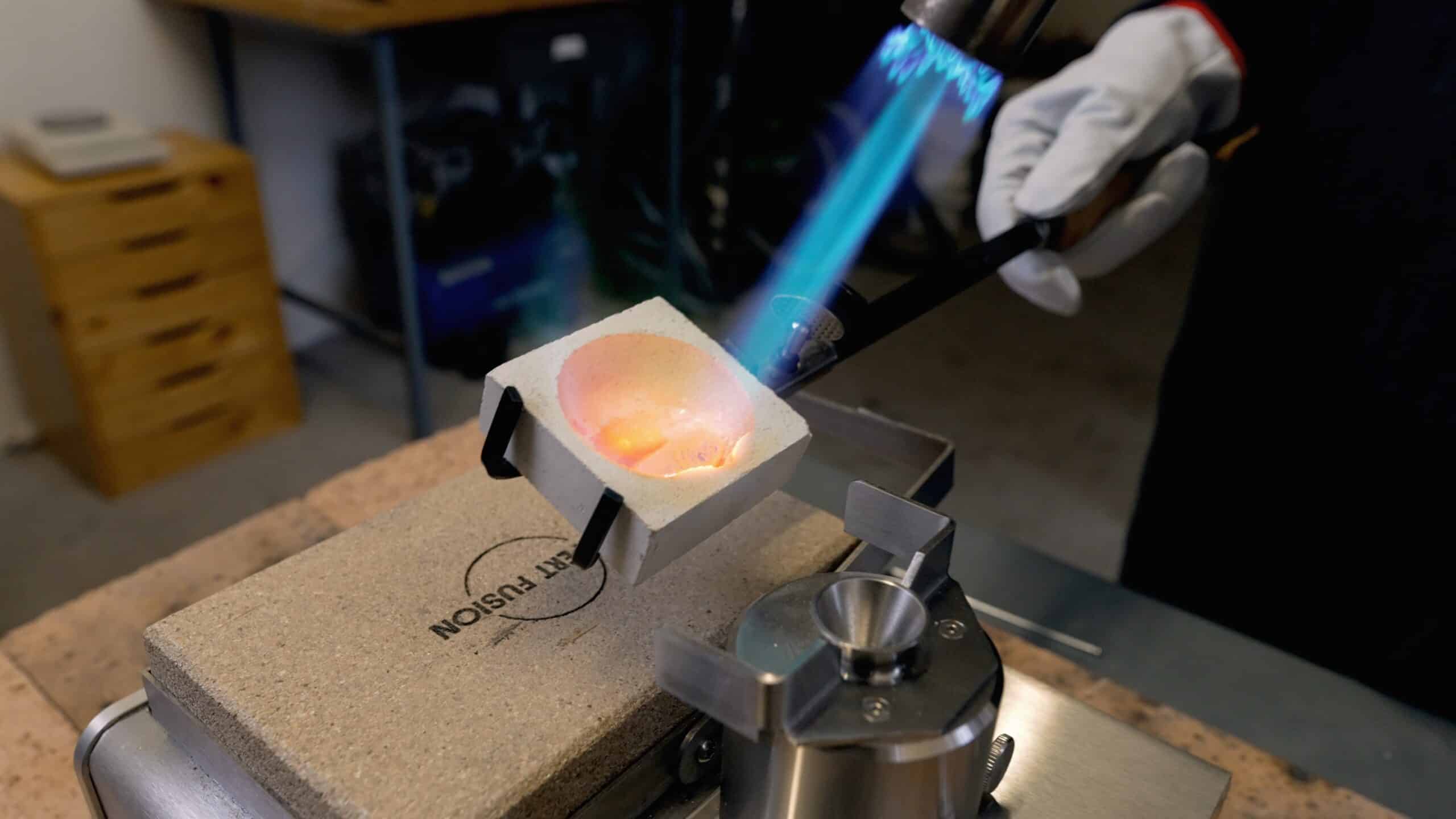
Melt with a propane-oxygen mixture if possible
Only with a propane-oxygen mixture can the necessary melting temperatures of gold and silver alloys – which can easily reach 1100 °C be achieved quickly and without difficulty.
Place the desired amount of alloy into the crucible. Old alloys or jewelry should be cleaned before melting. Use additional flux if necessary.
When melting, go slightly beyond the actual melting temperature, since the mold is not preheated. However, avoid overheating the melt, as this could lead to porosity.
Pouring with a flame requires appropriate training, sensitivity and experience.
Practice makes perfect!
Casting a ring blank
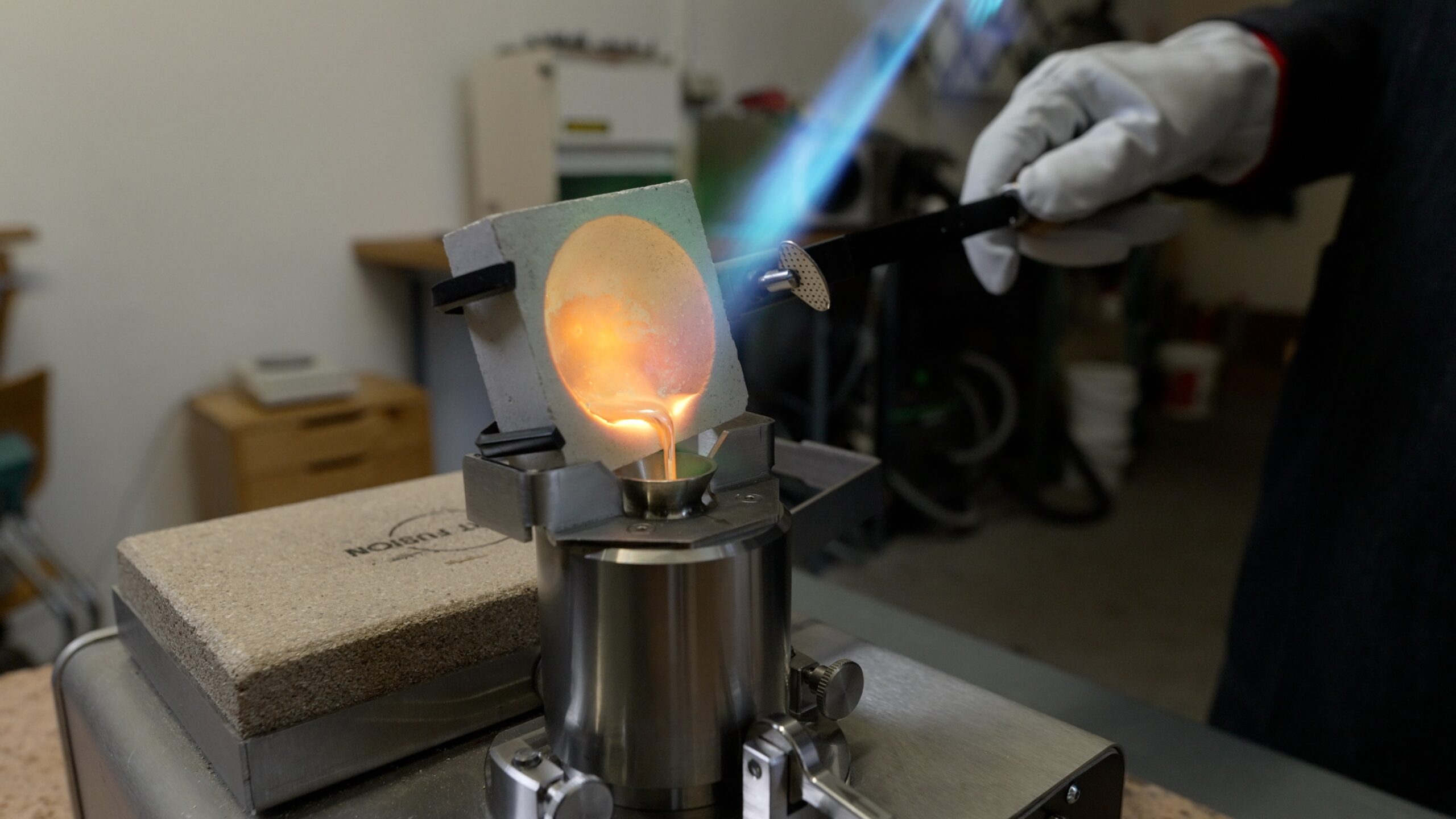
As soon as the alloy is completely melted, has a shiny surface and moves
smoothly under the flame, pour the metal calmly, with even movement
and without interruption into the center of the sprue hopper.
As soon as the melt has been poured, the rotation of the mold can be stopped.
Allow the ring blank to cool
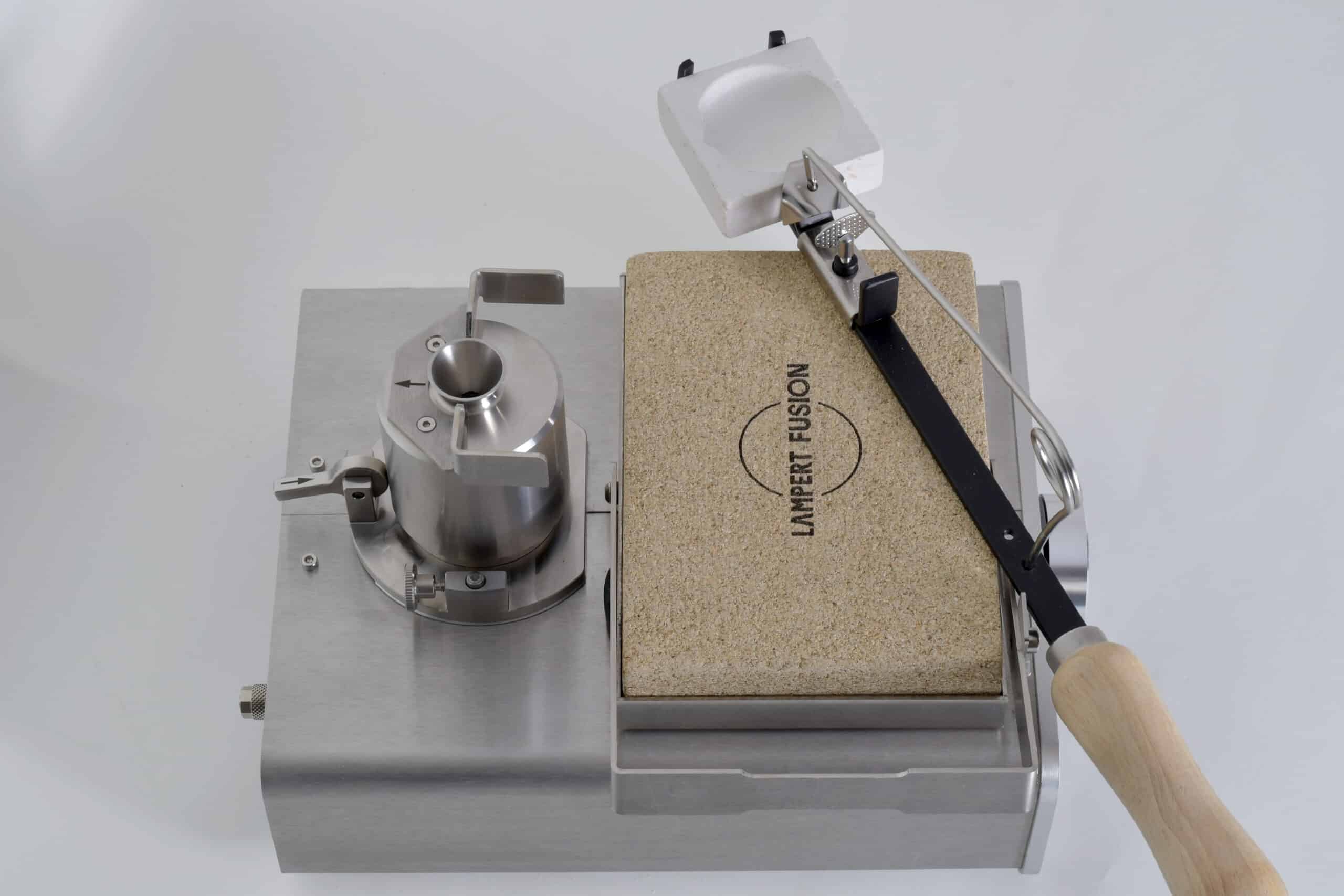
Extinguish the flame, close all gas cylinder valves and switch off the FUSION.
Allow all components and the FUSION to cool down for at least 5 minutes, preferably longer.
Remove ring blank
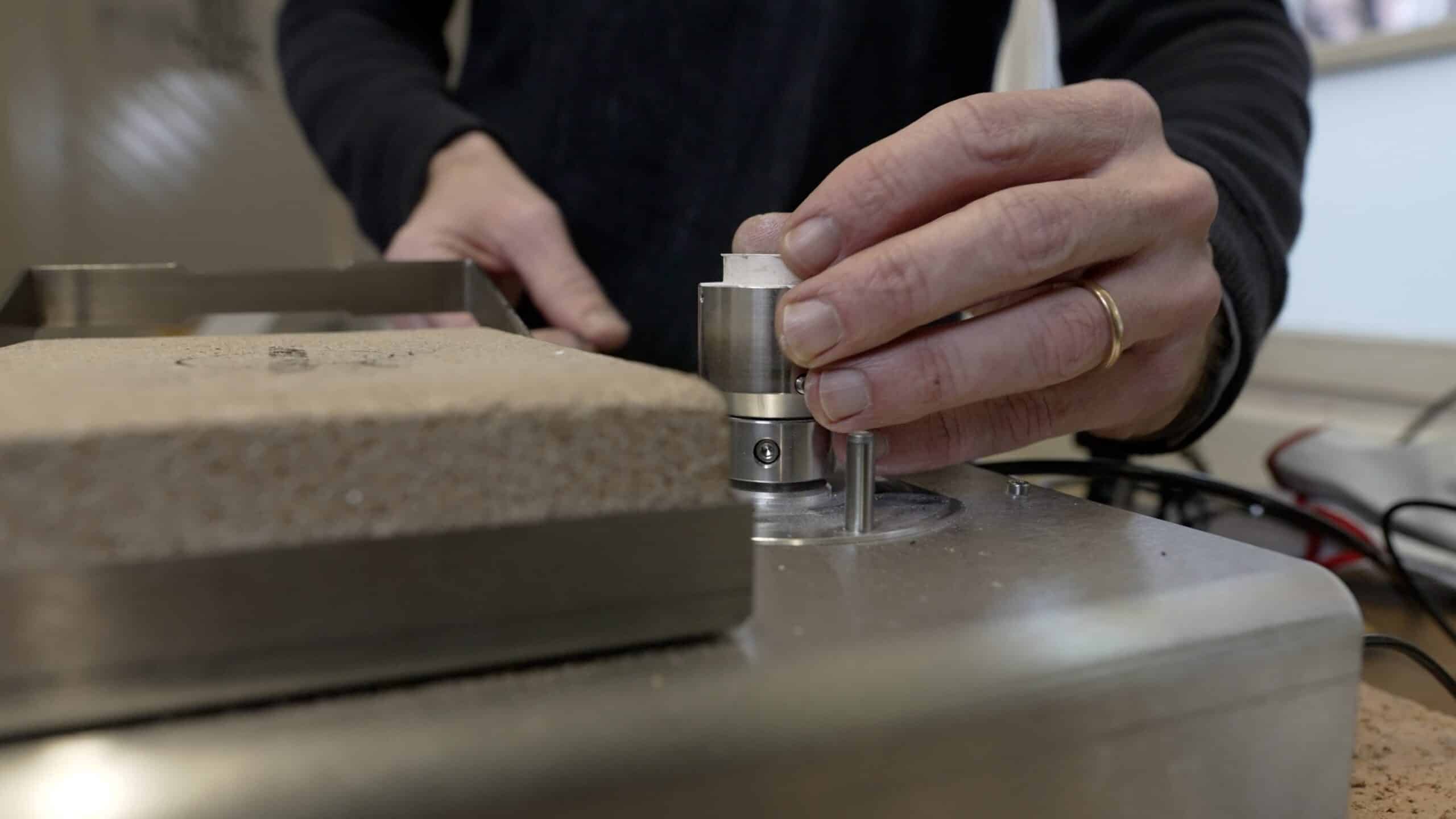
Once all components have cooled down sufficiently, remove the mold housing (wearing leather gloves if necessary), open the mold cover and remove the mold.
The ring can now be removed from the mold.
Recoat the mold
After three to four casting processes, the mold should be carefully cleaned (e.g. in an ultrasonic device or with a brass brush) and the coating should be reapplied with release agent as described above.
Further information on the Lampert FUSION can be found on the product website or on our YouTube channel.