Removal of engravings

Welding silver is difficult due to its physical properties, regardless of the welding equipment used. The material’s high thermal conductivity in particular causes problems, as the welding energy is dissipated quickly and small welding spots are created with little depth effect. With PUK welding technology, it is possible to work with welding rods of the same alloy in many situations.

1. Challenge

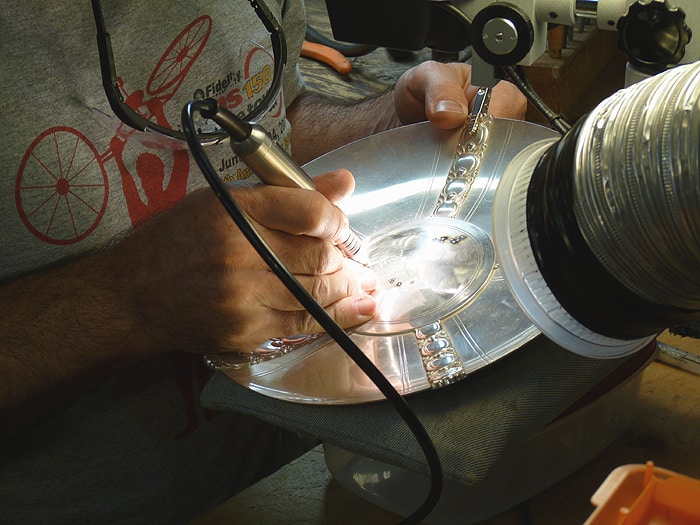
Old engravings can severely impair the appearance or value of an object. Silversmith Jeffrey Herman from West Warwick /USA had such a case here.

2. Removal of dirt and sulphides

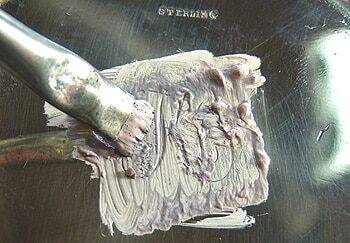
Use a hard brush and scouring agent to remove impurities from the recesses, as these could otherwise negatively affect the weld and, above all, encourage the formation of pores.

3. Ergonomic sitting position

Work like this can take several hours. Therefore, try to adopt as ergonomic a working position as possible. Large workpieces in particular also require a good range of movement. In exceptional cases, the handpiece can therefore also be guided directly in the hand (but please never work without eye protection!)

4. Application welding wire

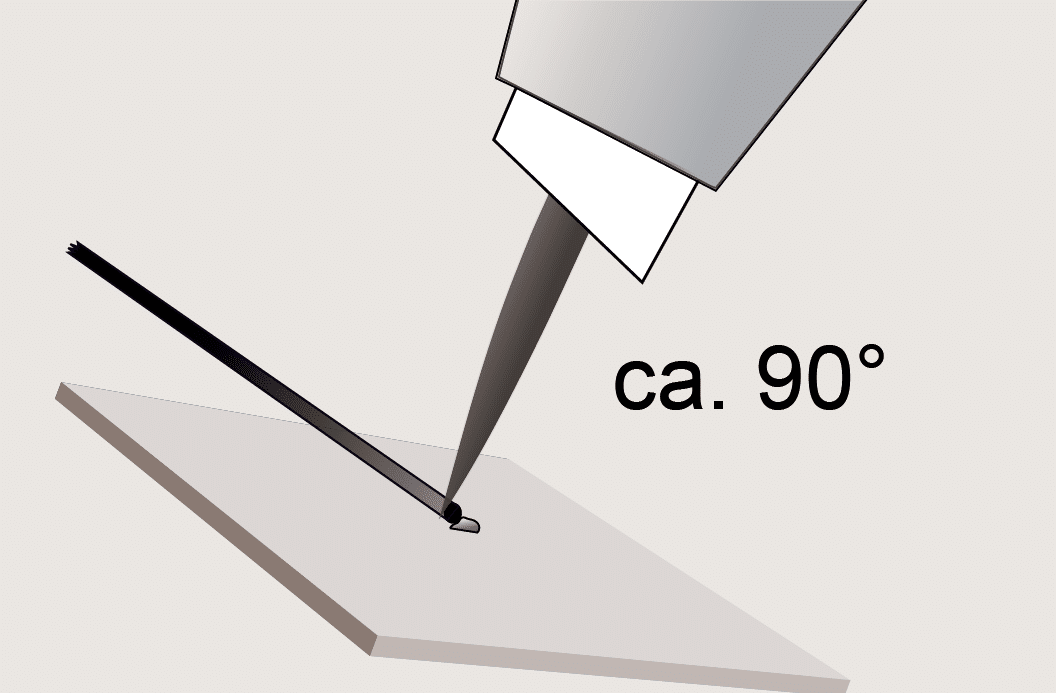
As silver is pushed rather than pulled by the arc, the electrode should be placed at an approx. 90° angle next to the wire or slightly overlapping during the welding process.

The welding wire (Ø 0.20 – 0.40 mm) is now welded to the surface drop by drop.
For this work, the parameters for silver, geometry application of welding wire ,
3 – 5 ms pulse duration and a welding power of 22 – 55 % should be used.
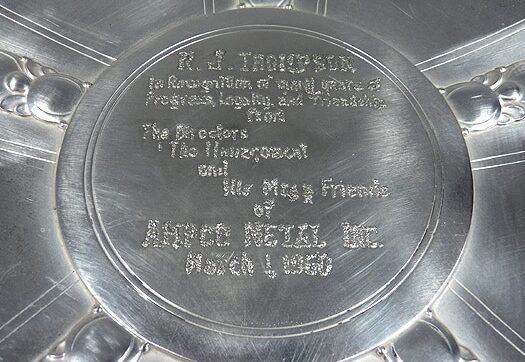
5. The filled engraving

The applied material is leveled in a second work step without adding any further material and any imperfections are sealed.

6.1 Compacting

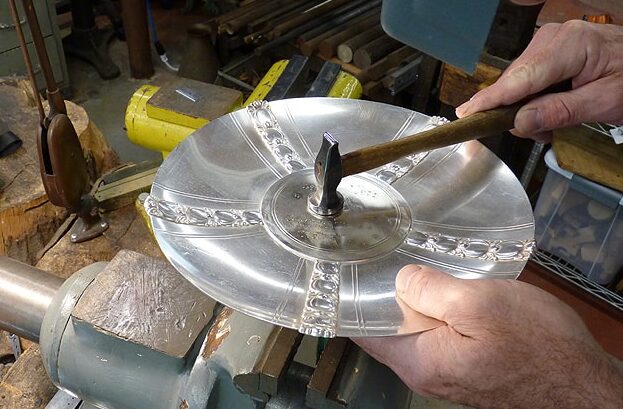
For large workpieces with flat surfaces, it is advisable to slightly level the applied material on the
anvil. This saves time when sanding and closes occasional pores.

Filling engravings on large surfaces may require subsequent soft annealing. The reason for this is that the filled material may have a different degree of reflection than the rest of the surface. This could otherwise result in a kind of “ghost” of the original engraving remaining visible.

6.2 Compacting

For small workpieces, however, the use of riveting and upsetting wheels is advantageous. However, these should not be too abrasive and should therefore be rounded off if necessary.

7. Grinding

The excess material is removed and the workpiece is sanded to the desired grain size as usual.

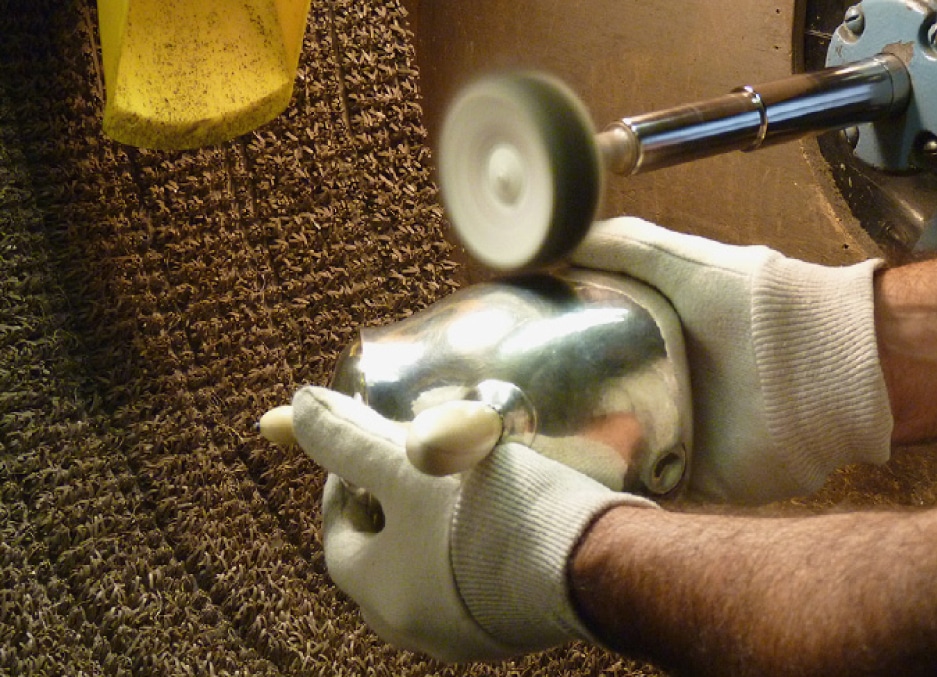
8. Polishing

As the material used is the same alloy, it can also be polished to a high gloss with soft polish carriers without any problems.

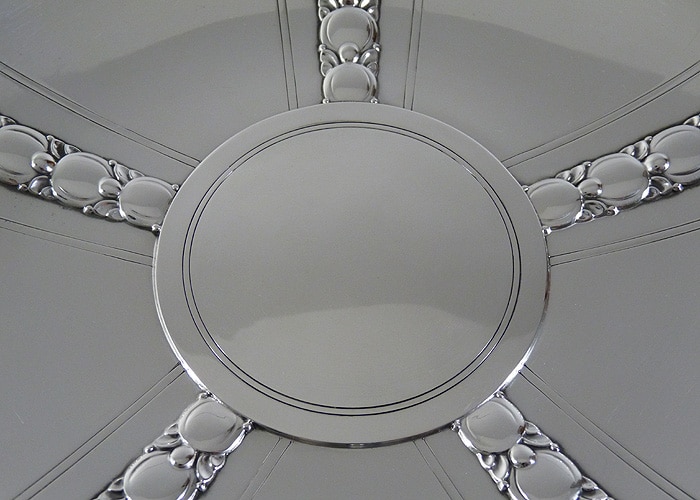
9. Result

The former engraving has disappeared. Neither a difference in color between the materials nor dents reveal to the viewer the object’s former condition or the work that has been carried out on it.

Do you have any questions?

Send us a message

Do you have any questions?

Send us a message